From the Deck
The Herbalist
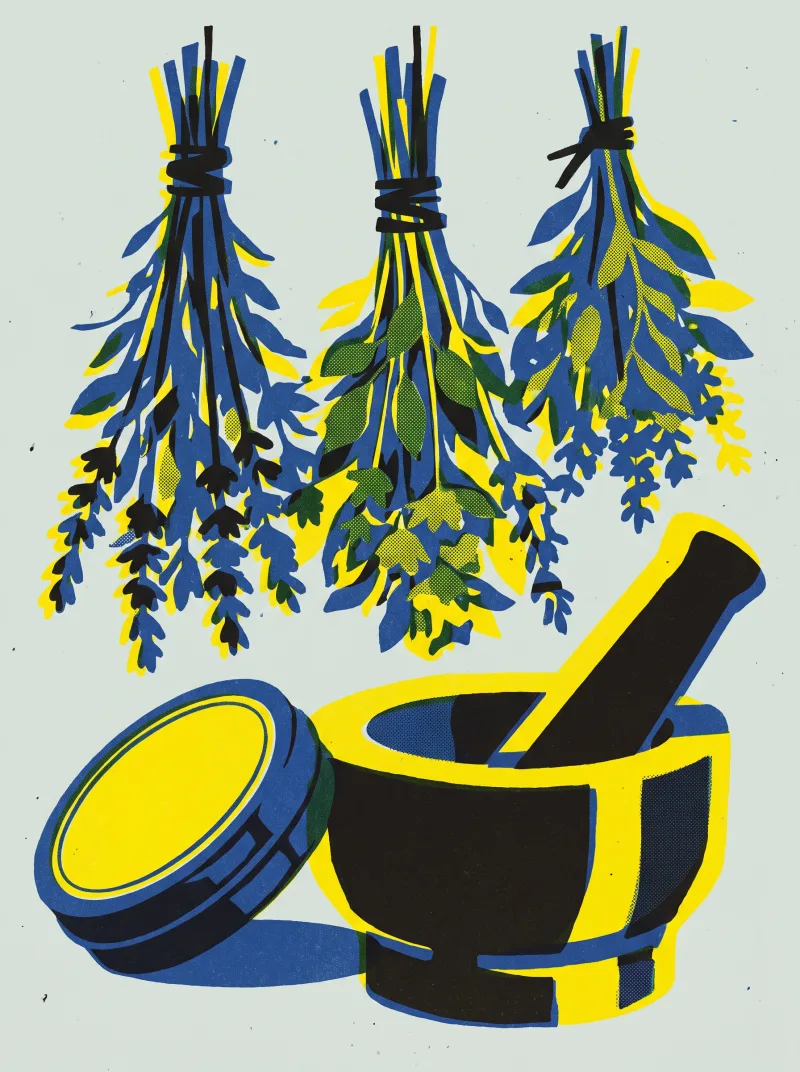
You notice the ceiling first. Bundles hanging from a rail or a beam or, in one house I know, a repurposed clothes airer — yarrow, mugwort, something silvery nobody can identify from across the room. The kitchen smells like a hedgerow that has been left in the sun.
Then you notice the jars. There is a shelf of them, and behind that shelf there is another shelf, and in a cupboard somewhere there is a box of jars waiting for a shelf that does not exist yet. Each is labelled in handwriting, sometimes with a date, occasionally with a note about where it was picked.
They will offer you a tea. It will be a genuine kindness and it will taste like a field.
Also try


24 ideas
Live prices from the shops, checked when you look.
So which one are they?
Rummaging.
More on buying for the Herbalist
What they've definitely already got
Jars. More jars than shelf. This is the running joke of the entire hobby and it is not a joke — every batch needs a vessel, jars are cheap, and the collection compounds. Do not buy jars. Do not buy a nice set of jars. They have some.
They have the basic tools: a mortar, a strainer, a funnel, a scale. They have their own dried stock of everything that grows locally, which is why a supermarket jar of dried thyme lands badly — they dried theirs in August and yours has been in a warehouse.
They probably have too much drying capacity in theory and none in practice: a ceiling rail that is full, a dehydrator that only comes out in September.
What is missing is almost always the finishing. Labels are masking tape. Tinctures are strained through a tea towel. The good oil is in a jar that used to hold something else, and the whole beautiful operation looks slightly like a laboratory that has been burgled.
What actually works
Anything that makes it look as good as it is. Letterpress botanical prints, hand-made label sets, wax seals, a proper apothecary rack. This person has built something genuinely lovely and is storing it in old chutney jars. The gift is dignity for the shelf.
Drying, properly. Hanging racks, mesh screens that stack, a small hand-built drying frame. September is a bottleneck for everybody in this hobby and everybody solves it badly, with a radiator and an airing cupboard.
Straining and pressing. Muslin by the metre, a small tincture press, a set of proper filters, a hand-thrown pouring bowl with a decent lip. The tea-towel-and- hope method is nearly universal and nobody enjoys it.
Old books, and beautiful new ones. Regional floras, out-of-print materia medica, hand-illustrated identification guides, folk-medicine histories. Secondhand is often the better gift here — a 1940s herbal with somebody's pencil notes in the margin is a far more interesting object than a new paperback.
One botanical they cannot get. Not a spice rack. A single unusual thing from a serious supplier — a resin, a bark, a root that does not grow here — chosen because it is not in the jars already. This is the one consumable that is never a duplicate.
What to spend
Under £30 covers a print, labels, muslin, or a good single botanical, and all of it gets used. £30–£70 buys drying racks, a small press, or a properly made mortar that will outlive everyone. Above £70 you are into furniture and serious equipment — lovely if you have seen their kitchen, a guess if you have not.
The mistake almost everyone makes
Buying the wellness version. The gift set of tea bags with a mandala on the box, the crystal-and-sage bundle from a high street shop, the tin of "herbal blend" that is mostly stalks. This person knows exactly what is in their tea because they picked it, and the wellness aisle is the commercial imitation of something they do properly. Take the craft seriously. Buy the muslin, the labels, the old book — the unglamorous things that say you looked at what they actually do.
Questions people actually ask
What do you buy someone who makes their own herbal remedies?
Not jars. They have jars — that is the running joke of the whole hobby. Buy what happens before and after the jar — drying, labelling, pressing, straining, and somewhere sensible for the finished thing to live.
Should I buy them dried herbs?
Only if it is something they cannot grow or forage where they live. They dry their own, and a supermarket jar of dried thyme is a small insult. A single unusual botanical from a proper supplier, on the other hand, is a genuine gift.
What is a good herbalist gift under £30?
A letterpress botanical print, a good muslin straining cloth, a set of hand-written labels, or a small hand-carved mortar. All used constantly and none of them a jar.
Are books a good idea here?
Yes, and unusually so. This is a reading hobby as much as a making one — regional floras, old materia medica, folk-medicine histories, beautifully illustrated identification guides. Secondhand and out of print is often better than new.