From the Deck
The Embroiderer
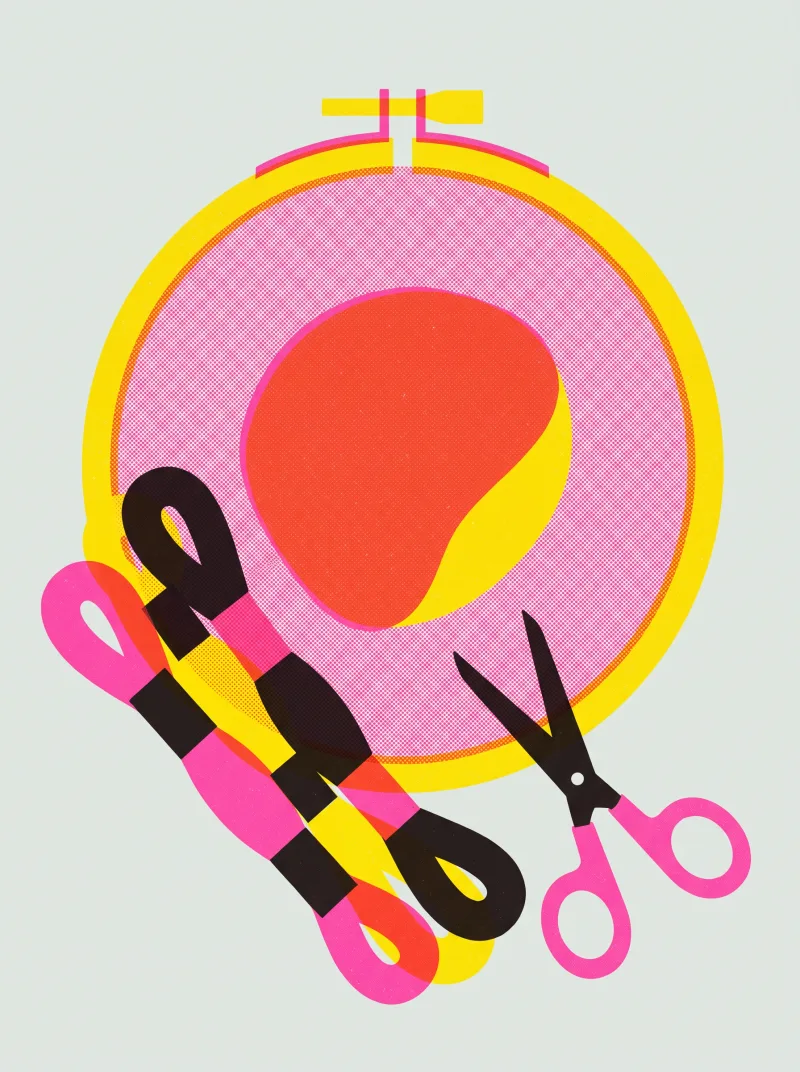
There are three hoops within reach of where they sit. One is nearly finished and has been nearly finished since March. One was started last week with real enthusiasm. The third is a hoop they have decided against and have not yet admitted to.
The thread situation is not a situation so much as a weather system. Some of it is in a box. Some is in a tin. A quantity of it is wound onto cards in a system that was abandoned partway through, and there is a knot of loose skeins in a drawer that everybody has agreed not to discuss.
They will finish the March one. Probably in November, in one sitting, while watching something they have already seen.
Also try
24 ideas
Live prices from the shops, checked when you look.
So which one are they?
Rummaging.
More on buying for the Embroiderer
What they've definitely already got
They have thread. All of it. Every number, some of them twice, bought in the sort of small quantities that never feel like spending. Do not buy standard floss. A skein costs under a pound, they can get it on any Tuesday, and there is no way for you to know which of the four hundred they are short of.
They have hoops, too, though mostly the plain machine-made kind that came in packs. They have needles somewhere. They have a pair of scissors that are not embroidery scissors and everybody knows it.
What they do not have is anywhere for any of it to live. This is the single most reliable gap on the card, and it stays open for years because organising thread is the sort of job you do instead of embroidering.
The other gap is the fabric. Most people work on whatever cotton came with a kit, and good linen — the right count, the right weight, a colour that is not white — changes the whole experience of the thing.
What actually works
Storage that somebody designed. Wooden thread boxes, laser-cut floss organisers, a hand-stitched needle book, a project bag with a flat bottom. This is the gap and it is a real one. Nobody buys this for themselves because it feels like buying a filing cabinet.
Hand-dyed thread and good linen. Small dyers producing variegated skeins in runs of thirty, and linen by the metre in colours that are not cream. The distinction matters: standard floss is a commodity, hand-dyed is a material. One is a duplicate, the other gets saved for something worth it.
A hoop worth keeping. Hand-turned beech or walnut, a proper brass fitting, a stand or a seat frame so they are not gripping it for four hours. There is a whole world of small woodworkers making these and the difference in the hand is immediate.
Small sharp things, properly made. Stork scissors, hand-forged snips, a thimble that fits, a needle threader that is not plastic. All tiny, all used every session, all currently the cheapest available version.
Designs by illustrators they would follow anyway. Patterns and kits from independent designers with a real style — botanical, folk, modern, filthy. The gift is the design, not the materials, so pick somebody whose work they would have chosen themselves.
What to spend
Under £30 is the strongest range on this card: a hand-turned hoop, a metre of good linen, proper scissors, or a set of hand-dyed skeins. £30–£70 buys storage that solves the problem permanently, or a hoop stand that changes how long they can work. Above £70 you are into frames and serious furniture, which is a delight if you know their setup and a guess if you do not.
The mistake almost everyone makes
Buying the sampler kit with the slogan on it. Cross-stitch about wine, a hoop that says something arch about anxiety, a beginner's kit for somebody who has been doing this for six years. It is affectionate and it reads as a shrug — this is a person with real skill in a craft that takes hundreds of hours to get good at. Buy them the material they would not buy themselves and stay well out of the way of the design.
Questions people actually ask
What do you buy someone who embroiders?
Storage, good linen, or a hoop worth keeping. They have the thread — all of it, everywhere — and what they do not have is anywhere to put it or a base fabric that is a pleasure to work on. Both are cheap to fix and immediately obvious.
Should I buy them thread?
Only hand-dyed. A standard floss number is something they can buy for under a pound and probably already own twice. A skein hand-dyed in small batches, variegated and slightly unrepeatable, is a different object — it is the one they save for something good.
What is a good embroidery gift under £30?
A hand-turned hoop, a metre of good linen, a pair of proper scissors, or a hand-dyed skein set. All four are used constantly and all four are usually the cheapest available version.
Is a kit a good idea?
For a beginner, yes. For somebody three years in, it depends entirely on the designer — an independent one whose style they admire is a lovely gift, a generic one is a duplicate of something in the cupboard. When in doubt, buy the materials and let them choose the design.